
SkinPen
Controlled Injury. Purposeful Repair.
Microneedling is a minimally invasive treatment that creates controlled microscopic channels within the skin, initiating the body’s natural wound-healing response.
At MAGY, we use SkinPen to address concerns such as uneven texture, selected acne scars, fine lines and overall skin quality.
No heat. No laser. Just a carefully controlled mechanical treatment designed to ask the skin to repair and remodel itself.
Designed to improve the appearance of uneven or irregular skin texture.
Can be used to improve selected types of atrophic facial acne scars.
Controlled micro-injury initiates a wound-healing response that includes collagen formation and remodelling.
Treatment depth and technique can be adjusted according to the treatment area, skin and clinical goal.
Overview
The Idea Is Simple: Create a Controlled Injury.
Microneedling uses fine, sterile needles to create thousands of microscopic channels within the skin.
That might sound counterintuitive, but controlled injury is the mechanism behind many resurfacing treatments.
The skin responds by initiating its normal wound-healing processes. This involves a coordinated series of cellular signals, tissue repair and collagen formation and remodelling.
As that process develops, microneedling can gradually improve aspects of skin texture and selected scarring.
The needles aren’t the result. They’re the signal that starts the process.
How It Works
Your Skin Does the Remodelling.
SkinPen contains a sterile, single-use needle cartridge that moves vertically across the skin at a controlled depth.
As microscopic channels are created, the body moves through its normal stages of wound healing.
The initial controlled injury triggers signalling involved in the normal repair process.
Cells involved in tissue repair become active and a new extracellular matrix begins to form.
Collagen continues to organize and remodel over time.
This is why the result isn’t immediate.
Redness after treatment is not the final result, and neither is the temporary plumpness that can occur immediately afterward. The changes we’re interested in develop as the tissue heals and remodels.
The Device Matters
Not All Microneedling Is the Same.
“Microneedling” describes the technique, but it doesn’t tell you everything about the treatment being performed.
The device, needle cartridge, treatment depth, consistency of needle delivery, sterility and technique all influence how controlled the treatment is. Just as importantly, what is applied to freshly treated skin and how the procedure is performed matter when the skin barrier is being intentionally disrupted.
At MAGY, we use SkinPen, a professional microneedling system licensed by Health Canada. Its sterile, single-use cartridge houses medical-grade stainless-steel needles on a reciprocating mechanism, allowing the needles to move in a controlled vertical pattern as microscopic channels are created.
Needle quality matters too. SkinPen’s needles have been tested and validated by the manufacturer to remain sharp for at least 80 minutes of use. Maintaining needle sharpness helps support consistent, controlled penetration of the skin throughout treatment rather than relying on needles whose performance may change as a procedure progresses.
Treatment depth can then be adjusted according to the area, tissue and clinical goal.
For us, choosing the device isn’t simply about creating microchannels. It’s about creating a controlled, reproducible treatment within an appropriate clinical protocol.
The goal isn’t just to needle the skin. It’s to control how, why and with what.
What We Treat
When Texture Is Part of the Problem.
Acne Scarring
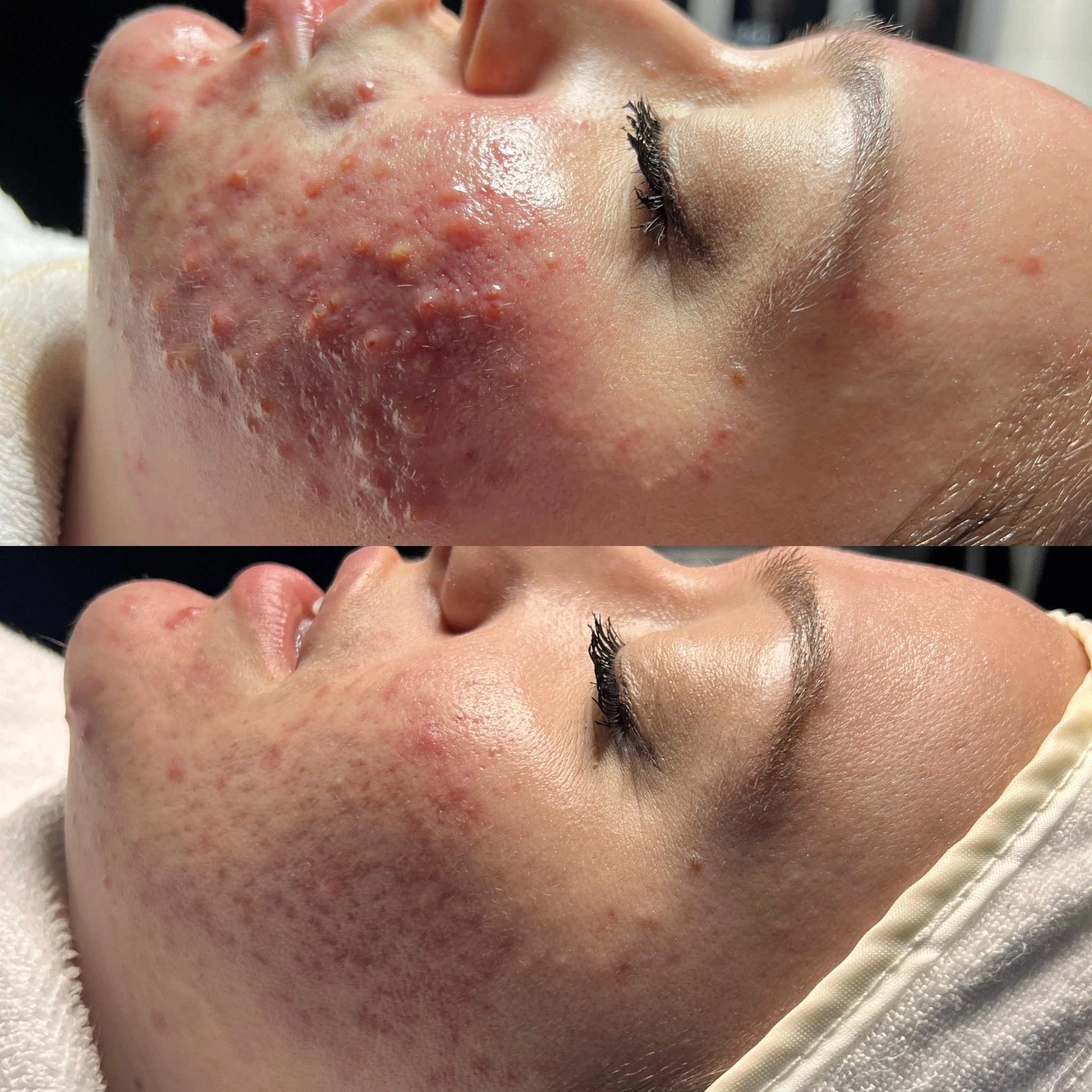
Microneedling can improve the appearance of selected atrophic acne scars by creating controlled injury within scarred tissue and initiating remodelling.
Not all acne scars are the same. Scar type, depth and tethering influence whether microneedling alone is likely to provide meaningful improvement.
Uneven Texture
For skin that feels or appears irregular, rough or less refined.
Fine Lines
Collagen remodelling may improve the appearance of selected fine lines where skin quality is contributing to the concern.

Neck Lines
Microneedling may be used on selected neck lines and textural changes following appropriate assessment.
Stretch Marks
Microneedling may also be considered for selected stretch marks, where controlled tissue remodelling may improve their appearance.
Overall Skin Quality
For some clients, microneedling is incorporated into a longer-term skin plan when the goal is gradual improvement in texture and overall skin quality.
Acne Scarring
First, Identify the Scar.
“Acne scarring” isn’t one type of tissue change.
Atrophic acne scars can vary in shape, depth and the degree to which they are attached to deeper tissue. Post-acne redness or pigmentation can also remain after acne resolves without representing a true structural scar.
Those distinctions matter.
Microneedling can be useful for selected textural and atrophic scars, but deeper or tethered scars may respond better to another procedure or a combination approach.
And if the concern is primarily residual redness or pigmentation rather than a structural scar, a light or laser-based treatment may make more sense.
We treat the type of scar—not simply the fact that acne was there.
Who It's For
When Controlled Remodelling Makes Sense.
Microneedling can be useful for clients whose primary concerns include selected acne scars, uneven texture, fine lines or broader skin-quality changes.
But creating controlled injury isn’t appropriate for every skin at every moment.
Active inflammatory acne, infection, impaired wound healing and certain medical or skin conditions can affect whether and when treatment should be performed.
And some concerns simply need a different tool.
Microneedling Vs Moxi
Two Ways to Create a Controlled Response.
Microneedling and Moxi can both be used to improve skin texture, but they create their effect differently.
Microneedling creates controlled mechanical micro-injury using fine needles. There is no laser energy or intentional thermal treatment involved.
Moxi is a 1927 nm non-ablative fractional laser. It creates microscopic treatment zones using laser energy and is particularly useful when superficial pigmentation and photodamage exist alongside texture.
Neither is universally better.
If structural texture or selected acne scarring is the primary concern, microneedling may make sense. If superficial pigmentation and broader photodamage are also prominent, Moxi may offer a different approach.
And sometimes neither treatment is enough on its own.
The mechanism should match the problem we’re trying to change.
Microneedling + Prp
When We Add Your Own Platelets.
Microneedling can also be incorporated into a treatment plan with platelet-rich plasma (PRP).
PRP is prepared from a sample of your own blood and contains concentrated platelets and their associated signalling proteins.
The two treatments have different roles: microneedling creates the controlled mechanical injury that initiates a wound-healing response, while PRP introduces an autologous platelet preparation into the treatment plan.
We don’t consider PRP necessary for every microneedling treatment. Whether it adds something useful depends on what we’re trying to accomplish.


Results
Results Follow Healing.
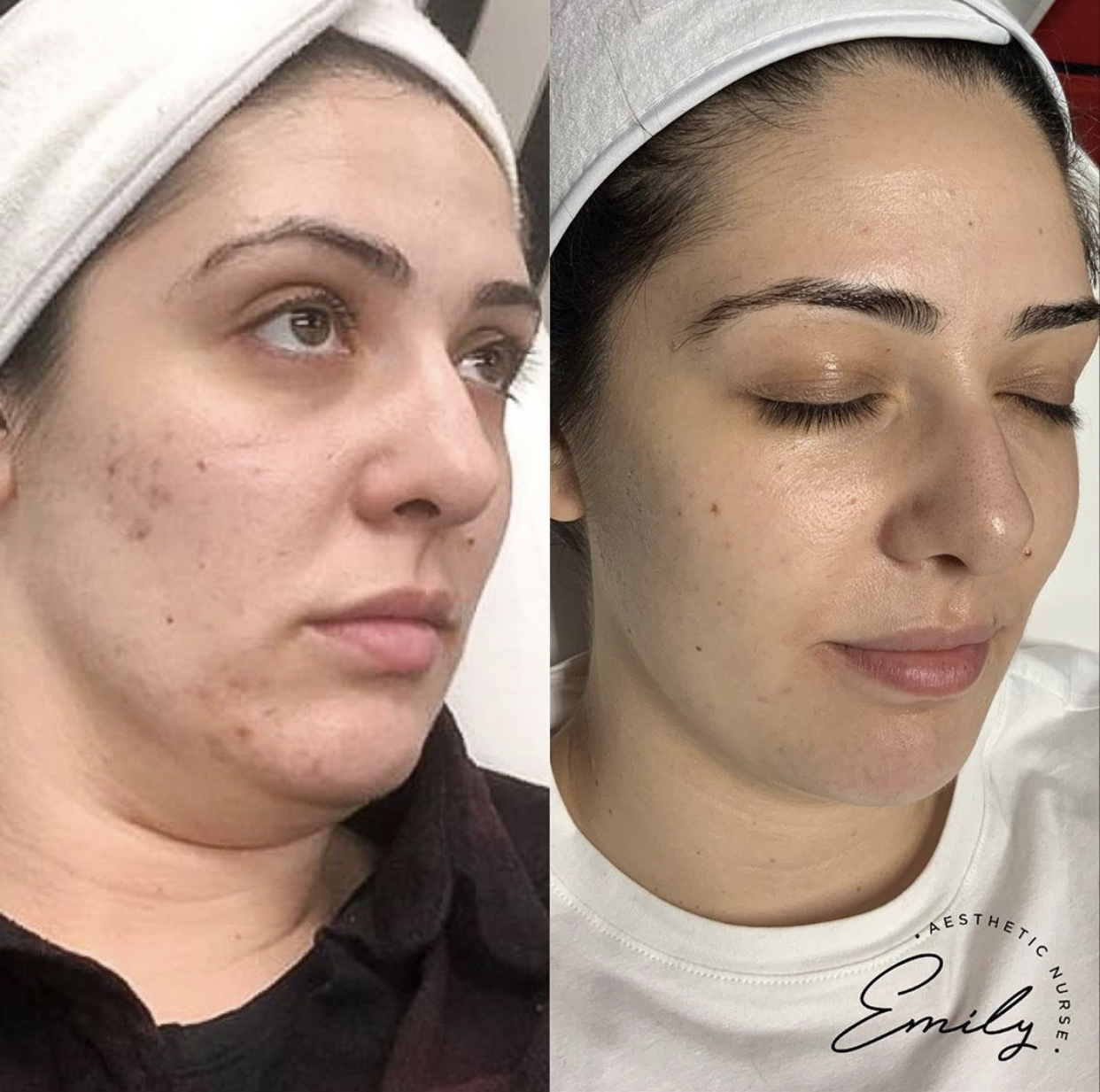
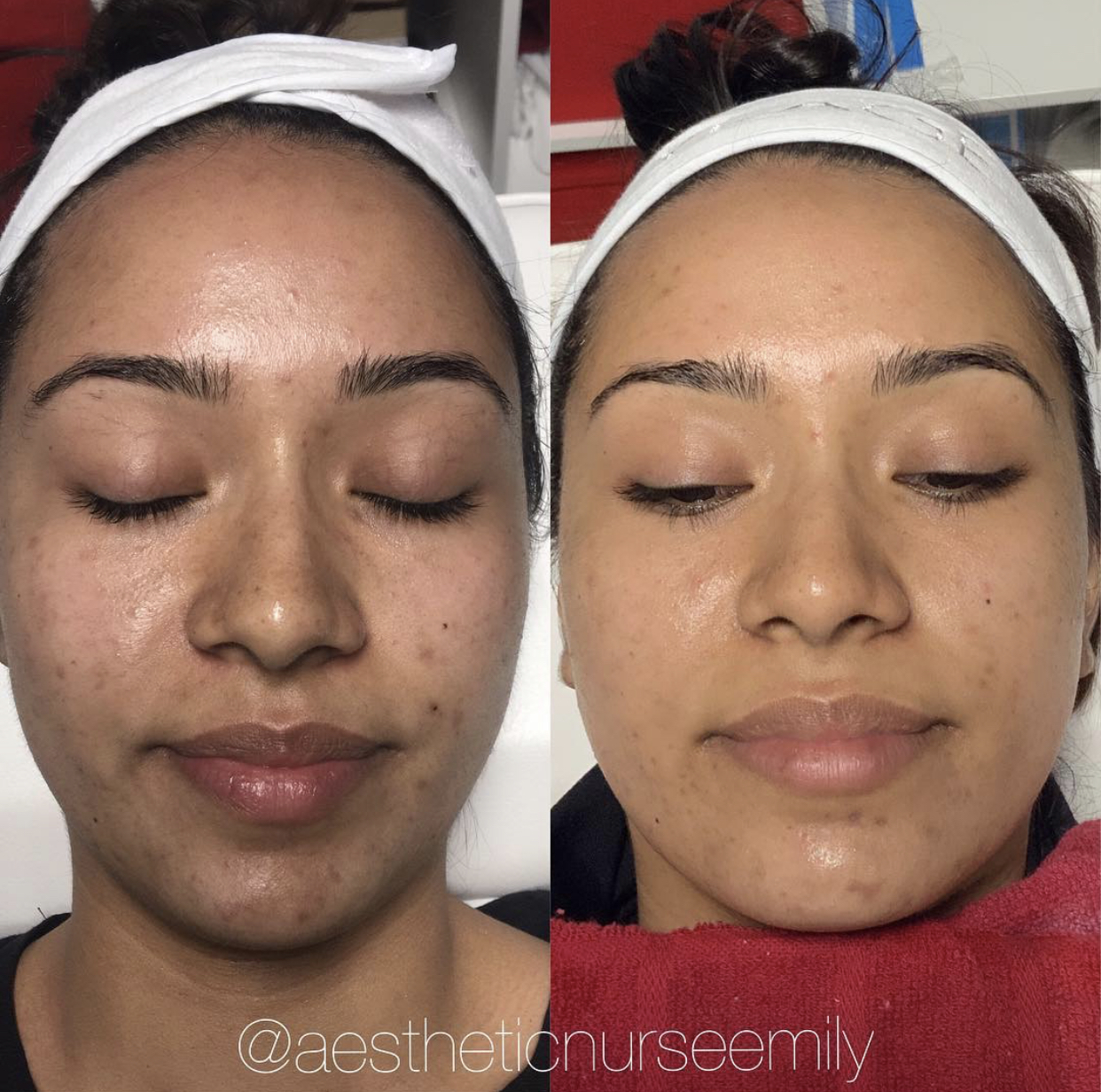
Microneedling results develop gradually.
Immediately following treatment, the skin may appear red and temporarily feel tighter or slightly swollen. These early changes shouldn’t be confused with the longer-term result.
Over the following weeks, the wound-healing and remodelling processes continue.
How much improvement occurs depends on your baseline skin, the concern being treated, treatment depth, number of treatments and individual biological response.
For concerns such as acne scarring, multiple treatments may be appropriate. For someone using microneedling as part of a broader skin-quality plan, the schedule may look different.
We build the series around the reason we’re treating—not an automatic package number.
What To Expect
Your Treatment, From Assessment To Result.
We’ll assess your skin, texture, scarring, active skin conditions, medical history, previous treatments and treatment goals.
If acne scarring is the concern, we’ll also look at the type and depth of scars rather than assuming all scars should be treated the same way.
The skin is cleansed and prepared for treatment. A topical anesthetic may be applied beforehand to improve comfort.
We’ll also review any treatment-specific preparation, including skincare that may need to be temporarily adjusted.
SkinPen is passed across the treatment area using a sterile, single-use needle cartridge.
Treatment depth and technique are selected according to the area and treatment goal rather than using one setting across the entire face.
Redness, warmth, sensitivity, mild swelling, dryness or tightness can occur following microneedling.
Because the skin barrier has temporarily been disrupted, aftercare matters. We’ll provide instructions regarding cleansing, skincare, sun protection, exercise and when your usual active products can be restarted.
Once the skin has healed, we can assess the response and determine whether another microneedling treatment—or a different modality—belongs in the plan.
Treatment Add-Ons
What We Use With Microneedling Matters.
Microneedling temporarily alters the skin barrier and creates microscopic channels within the treated tissue. For that reason, we are deliberate about what is applied during and immediately following treatment.
Depending on the treatment plan, microneedling may be performed alone or alongside an appropriately selected treatment designed for use within the clinical protocol. Options may include:
Selected hyaluronic acid formulations may be incorporated into the treatment protocol.
Selected professional formulations containing vitamins and other ingredients may be used according to the treatment plan.
Selected polynucleotide/PDRN-based formulations may be incorporated where appropriate.
Selected topical formulations containing exosome-derived ingredients may be considered as part of certain treatment protocols.
PRP prepared from your own blood may be combined with microneedling as part of an autologous treatment approach.
Not every add-on is appropriate—or necessary—for every treatment. What we use depends on your skin, treatment goals and the specific protocol being performed.
More isn’t automatically better. What goes onto freshly treated skin should have a reason for being there.
The MAGY Approach
The Goal Isn't More Collagen. It's Better Skin.
“Collagen stimulation” has become a catch-all phrase in aesthetics.
But collagen isn’t the only consideration—and creating more injury doesn’t automatically create a better result.
We look at what is actually contributing to the concern: scar architecture, texture, pigmentation, vascularity, skin quality and the degree of correction you’re looking for.
That may lead us to SkinPen alone, microneedling with PRP, Moxi or another resurfacing treatment, or a combination approach over time.
We also consider the environment in which the skin is being asked to heal: appropriate skincare, sun protection and the broader factors that support normal tissue repair.
Treatment creates the signal. Your skin has to do the rest.
PERSONALIZED CARE, BY DESIGN
Not sure where to begin? That's what we're here for.
Every client comes to us with different concerns, goals, and expectations. Our role is to understand yours, provide thoughtful guidance, and develop a treatment plan that makes sense for you.
Whether you’re exploring a specific treatment or simply looking for a place to start, we’re here to help you navigate your options.
Not sure which treatment is right for you? Connect with our team to discuss your concerns, ask questions, and determine the most appropriate next step.
From skin health and regenerative aesthetics to wellness and longevity, explore our range of treatments and the concerns they're designed to address.
Learn more about our philosophy, our team, and the clinical approach behind the care we provide.
Microneedling
Frequently Asked Questions
SkinPen is a professional microneedling system that uses a sterile, single-use needle cartridge to create controlled microchannels at adjustable treatment depths.
SkinPen is licensed as a Class II medical device by Health Canada.
Microneedling doesn't physically eliminate or permanently “close” pores.
Improvements in overall skin texture may make pores appear less noticeable in some clients, but pore size is influenced by several factors including genetics, sebaceous activity and skin structure.
Microneedling isn't primarily a pigment-targeting treatment.
Some clients may notice improvements in overall tone as the skin remodels, but concerns such as sun-related pigmentation, post-inflammatory pigmentation and melasma require individual assessment.
When pigment is the primary target, another treatment may make more sense.
Not exactly.
Microneedling can be performed on its own. A treatment commonly referred to as a “Vampire Facial” combines microneedling with platelet-rich plasma prepared from your own blood.
We don't treat microneedling simply as a way to increase penetration of everyday skincare products.
Microneedling temporarily disrupts the skin barrier, which means careful product selection and sterile technique are particularly important. Only products appropriate to the treatment protocol should be used with freshly treated skin.
There isn't one number appropriate for everyone.
A client treating acne scars may require a different series than someone addressing milder textural changes. Treatment frequency and number are based on the concern, treatment response and degree of improvement we're trying to achieve.
Visible recovery varies according to treatment intensity and individual response.
Redness, warmth, sensitivity, mild swelling, dryness or tightness can occur after treatment, generally lasting 1-5 days. These changes generally settle as the skin barrier recovers.
We'll give you expectations based on the treatment being performed rather than promising a universal downtime.
A topical anesthetic is commonly used before treatment to improve comfort.
Sensation varies according to treatment depth, area and individual sensitivity. Some areas may feel more noticeable than others.
We generally avoid microneedling directly through active inflammatory or infected lesions.
Acne should first be assessed and appropriately managed. Once active disease is controlled, we can determine whether treatment for residual scarring or texture is appropriate.
We defer elective microneedling during pregnancy.
Treatment can be reconsidered afterward based on your skin and treatment goals.
Because microneedling creates mechanical rather than light- or heat-based injury, it can be considered across a broad range of skin tones.
That doesn't eliminate the possibility of inflammation or post-inflammatory pigment changes, however. Skin history, pigmentation tendency and treatment intensity still matter.
No.
Professional medical microneedling uses a regulated device, sterile single-use components, controlled treatment depths and clinical infection-prevention practices.
At-home rollers and needling devices aren't equivalent to an in-clinic SkinPen treatment and carry different considerations around depth, sterility and skin injury.
MAGY Skin and Health Clinic
Start With What You Want to Change About the Skin.
You don’t need to decide whether you need SkinPen, Moxi, PRP or another resurfacing treatment before you arrive.
We’ll assess your texture, scars and overall skin quality, then determine what type—and degree—of controlled treatment makes sense.
The goal isn’t simply to create injury. It’s to create the right response.